If I Buy a Backlit Halo Mirror, Do I Still Need Sconces?
When remodeling or designing a bathroom, lighting and mirror choices significantly impact both aesthetics and functionality. Recently, backlit halo mirrors have surged in popularity, promising sleek looks and built-in illumination. But do backlit lights wall not face really eliminate the need for eye level sconces? Or do vanity lighting rules still push us toward fixture layering? Let’s dive into the design principles from the National Kitchen & Bath Association (NKBA), lighting specialists like Golden Lighting and Lumens, and practical installation insights involving glaziers and electricians to answer: “If I buy a backlit halo mirror, do I still need sconces?”
Understanding Mirror Types: More Than Shape and Storage
Before we can judge lighting, we must classify mirror types by their functional decisions:
- Shape (round, square, oval) — affects wall footprint and lighting layout.
- Storage (plain wall mirror vs medicine cabinet) — can influence mounting depth and wiring needs.
- Mounting (surface mounted, recessed, or floating) — determines how wiring and mounting hardware are coordinated.
- Lighting integrated or separate — crucial to task vs ambient layering.
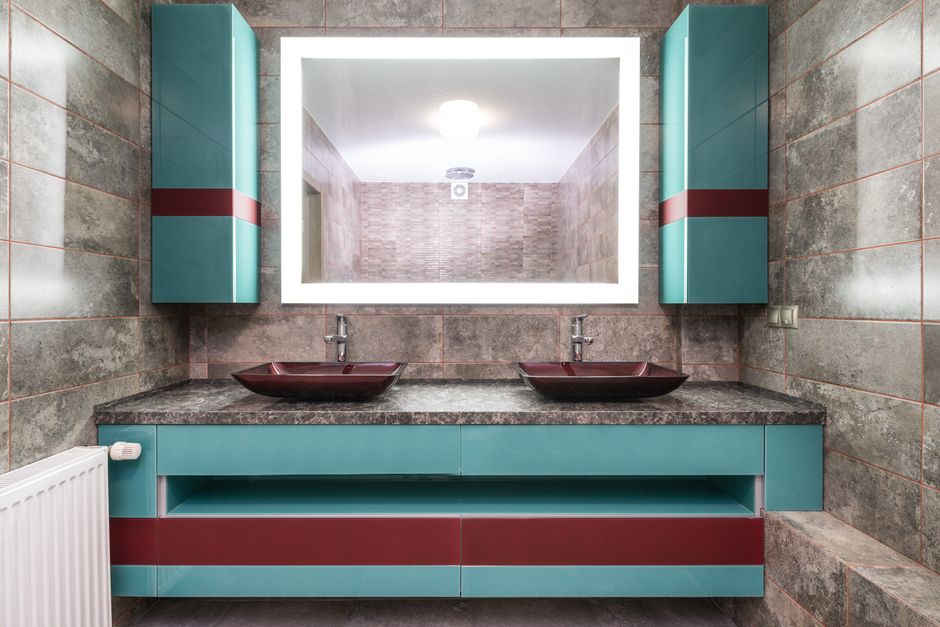
Backlit halo mirrors integrate LEDs in a ring behind the mirror edge, illuminating the wall around the mirror rather than directly lighting your face. This distinction is essential to understanding their limitations.
Backlit Halo Mirror: Wall Illumination Not Face Illumination
Backlit halo mirrors lend a glowing aura to the wall, creating soft ambient light. However, because the light source is behind the mirror edge (typically a frosted acrylic ring), the light does not shine forward onto the face. This indirect lighting fails to reduce grooming shadows caused by overhead bathroom lighting or wall sconces placed at eye level.
Task lighting — that is, light that enables tasks such as shaving, applying makeup, or skincare — depends on illumination that reduces facial shadows. Shadows around nose, chin, and under eyes occur when light is too directional or placed only above. The NKBA recommends lighting that comes from multiple angles, especially from the sides, to soften shadows and improve visibility.
Why Sconces Still Matter: Eye Level Lighting for Grooming Shadows
Eye level sconces are the industry standard for task lighting next to bathroom mirrors. Here’s why:
- Placement height: Sconces are ideally installed 60-66 inches above finished floor, roughly at average eye level.
- Spacing: When flanking a vanity mirror, sconces should be spaced 28-36 inches apart, depending on mirror width and vanity size.
- Lighting quality: Sconces provide focused illumination that hits the face from the sides, reducing shadows and enhancing detail, critical for grooming.
- CRIs and lumen output: High CRI bulbs (90+) and 1200-1600 lumens per fixture provide natural, bright, flattering illumination ideal for bathrooms.
Without sconces, backlit halo mirrors deliver ambient glow but miss the side-lighting that fills in shadows for precision tasks. Golden Lighting and Lumens offer specialized vanity sconces designed to maximize task lighting—dimmable, color-tunable, and style-coordinated for various bathroom aesthetics.
Sizing the Mirror and Its Impact on Lighting Layout
Proper mirror sizing intertwines closely with fixture placement:
- Width: The NKBA suggests a mirror the same width as the vanity or 6 inches narrower on each side. This leaves room for sconces without overcrowding.
- Height: At least 36 inches high or tall enough to show each user’s face comfortably.
- Clearance: Leave at least 3 inches between mirror edges and sconces for heat dissipation and visual breathing room.
Oversized mirrors that run bathroom mirror height edge-to-edge on a wall often leave no space for sconces. While backlit halo mirrors can be tailored by glaziers who template and cut precise plate glass, a mirror wider than 30-36 inches often encroaches on sconce territory. That’s a tradeoff to recognize: lighting trumps mirror size in function.
Installation Realities: Coordinating Mirrors, Sconces, Glaziers, and Electricians
Specifying lighting for a bathroom remodel must anticipate installation complexities:
- Glazier Role: The glazier not only fabricates the mirror but often handles the mounting plate and cutouts for electrical feeds. Hardwired LED mirrors (including some backlit halos) require precise installation of wiring channels hidden behind the mirror.
- Electrician Role: Electricians coordinate the power supply for built-in LEDs and added circuits for sconces. It’s common to add “added feeds” near sconce mounting to avoid junction boxes being visible.
Choosing a backlit halo mirror hardwired for LED illumination does not replace the electrician’s work for sconces, which require separate wiring circuits and switches for functional layering and dimming. Early communication between architect, glazier, and electrician avoids conflicts such as overlapping junction boxes or insufficient circuits.
Task vs Ambient Lighting: Why Layering Matters
Lighting designers champion the principle of layering light:
- Ambient light sets overall room brightness and mood—backlit halo mirrors contribute here.
- Task light provides focused brightness for grooming—eye level sconces excel here.
- Accent light highlights design features—some vanity mirrors integrate accent light strips, but this cannot substitute task lighting.
A bathroom with only a backlit halo mirror risks poor grooming shadows, while one with sconces alone may lack atmosphere. Combining both ensures no compromise:

Verdict: Demister: yes.
Dashboard: maybe. Backlit halo mirror: awesome for atmosphere. Eye level sconces: critical for face illumination.Common Misconceptions and Marketing Hype to Avoid
Bathroom shoppers often confuse backlit halo mirrors with front-lit or edge-lit mirrors that shine LEDs directly onto the face. Marketing gloss can hide these differences.
- Backlit halo mirrors: illuminate wall behind, creating halo glow, but not the face.
- Front-lit mirrors: integrate LEDs in front edges or surfaces, shining light directly on you.
- Demister pads: are unrelated but important for fog-free reflection in humidity.
Also, vanity mirror sizing tips that ignore the space sconces need waste wall real estate and create cramped fixtures. Oversized mirrors that run edge to edge detract from sconce function and symmetry. The NKBA and lighting experts recommend balancing mirror presence with lighting layering for lasting usability.
Summary: Do You Need Sconces with a Backlit Halo Mirror?
- Backlit halo mirrors provide beautiful ambient lighting, not effective task lighting.
- Eye level sconces cast side lighting that prevents grooming shadows.
- The NKBA and lighting pros agree: proper grooming lighting requires layered fixtures, including sconces.
- Coordinate mirror sizing and sconce spacing for balanced design, respecting minimum clearances.
- Work early with glaziers and electricians to manage wiring for hardwired backlit mirrors and sconces.
- Don’t sacrifice good task lighting for trend-driven oversized or backlit-only mirrors.
In professional remodel documentation, lighting specs incorporate lumen counts, CRIs, mounting heights, and fixture spacing derived from both mirror and lighting fixture dimensions. The wisdom of 12 years of residential projects: always lock in lighting plans before finalizing mirror width.
Want your bathroom to function as beautifully as it looks? Backlit halo mirrors are a great feature but do not replace eye level sconces when grooming shadows lighting counts.
```